What is Valley North?
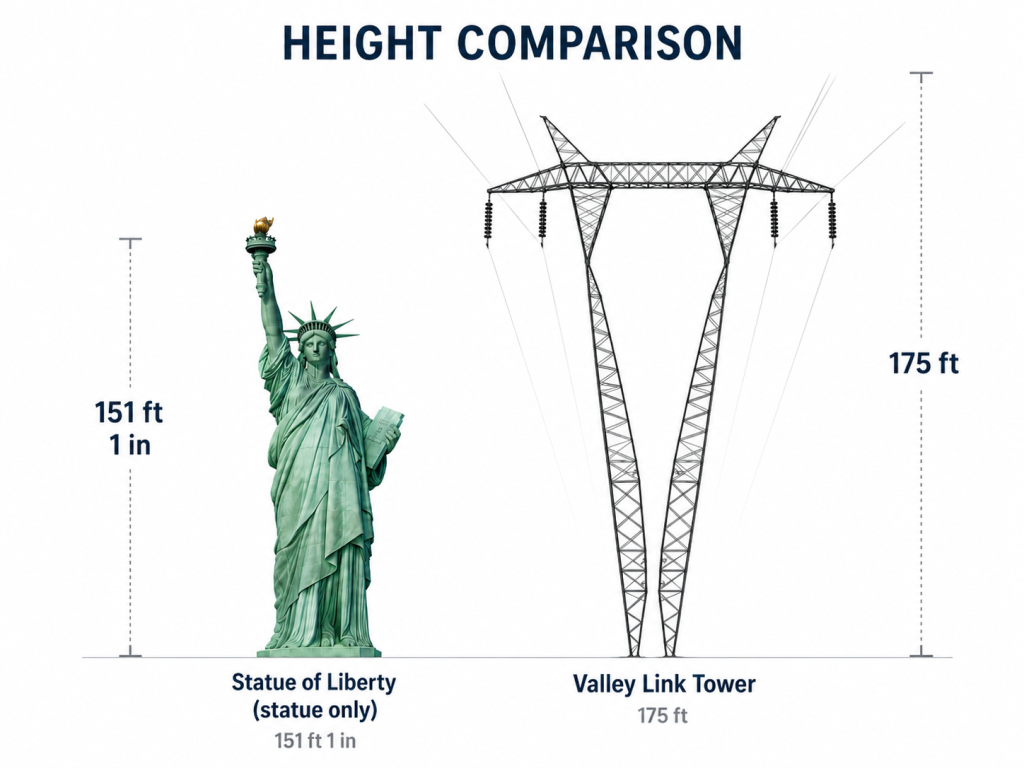
Valley North is a proposed 765,000 volt high voltage transmission line, one of the largest ever proposed in our region. In Loudoun County it would enter from West Virginia over Short Hill Mountain and cut across the northwestern part of the county, through the Lovettsville, Neersville, Taylorstown, and Catoctin areas, before crossing the Potomac into Maryland. It would require a new, permanently cleared right of way roughly 200 feet wide. This is not a single tower. It is a continuous line of steel lattice structures marching across the county.
The line is being advanced to move electricity toward the data centers concentrated in northern Virginia. In plain terms, Loudoun’s land would carry the burden so that server farms can keep growing. Valley North is also the first of a new generation of 765 kV lines that could spread across the Mid-Atlantic if it succeeds here, including through other parts of Loudoun.
Your land, taken for a corridor you did not choose
If the corridor crosses or borders your property, you could face a forced easement through eminent domain, years of construction, and the permanent loss of use of part of your land. The proposed routes cross land enrolled in Loudoun County’s land use taxation program and land protected by open space and conservation easements held by Loudoun County, the Virginia Outdoors Foundation, federal agencies, and private land trusts.
Virginia law asks the State Corporation Commission to choose a route that avoids or reasonably minimizes harm to homes, scenic assets, historic and cultural resources, and the environment. There is nothing reasonably practicable about a 765,000 volt tower on your land, yet the current law still allows that land to be taken, and it works against less damaging alternatives simply because they cost more to build up front.
A cleared corridor changes how land drains, how it can be farmed, and how safe it feels to live beside. These are not small trade offs for the people who live there.
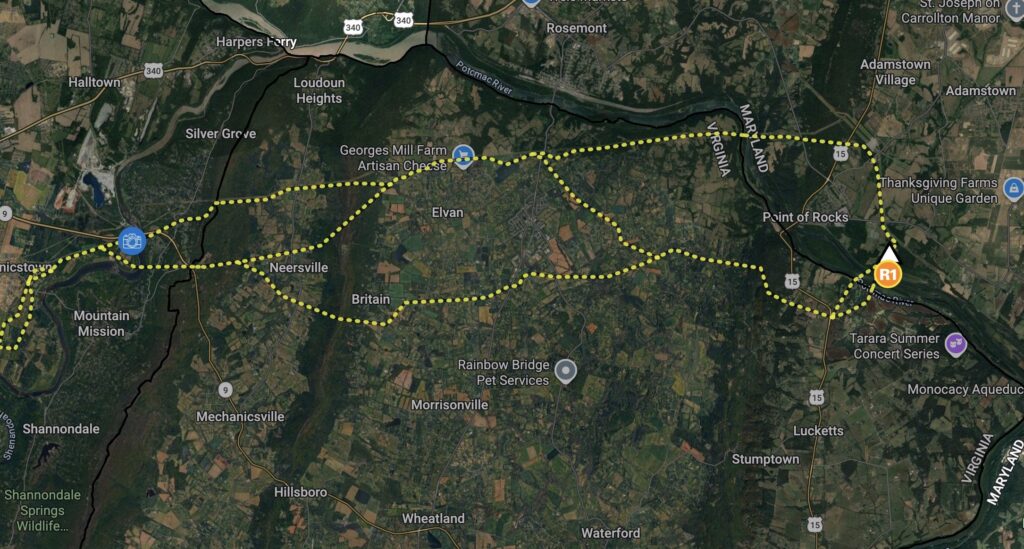
Explore the interactive map and find your address Then tell us if you are in the path
Damage to forests, streams, and the places we protect
Cutting a corridor across our ridgelines clear cuts thousands of acres of contiguous forest, farmland, and habitat, fragments wildlife corridors, and disturbs streams and water quality. In Loudoun the routes threaten the Catoctin Creek State Scenic River and its tributaries, Sweet Run State Park, the Islands of the Potomac Wildlife Management Area, and the globally recognized views of the Appalachian National Scenic Trail and the Potomac River. Once this land is cleared, it does not come back in our lifetimes.
Don’t let Valley Link hide the real driver: data centers
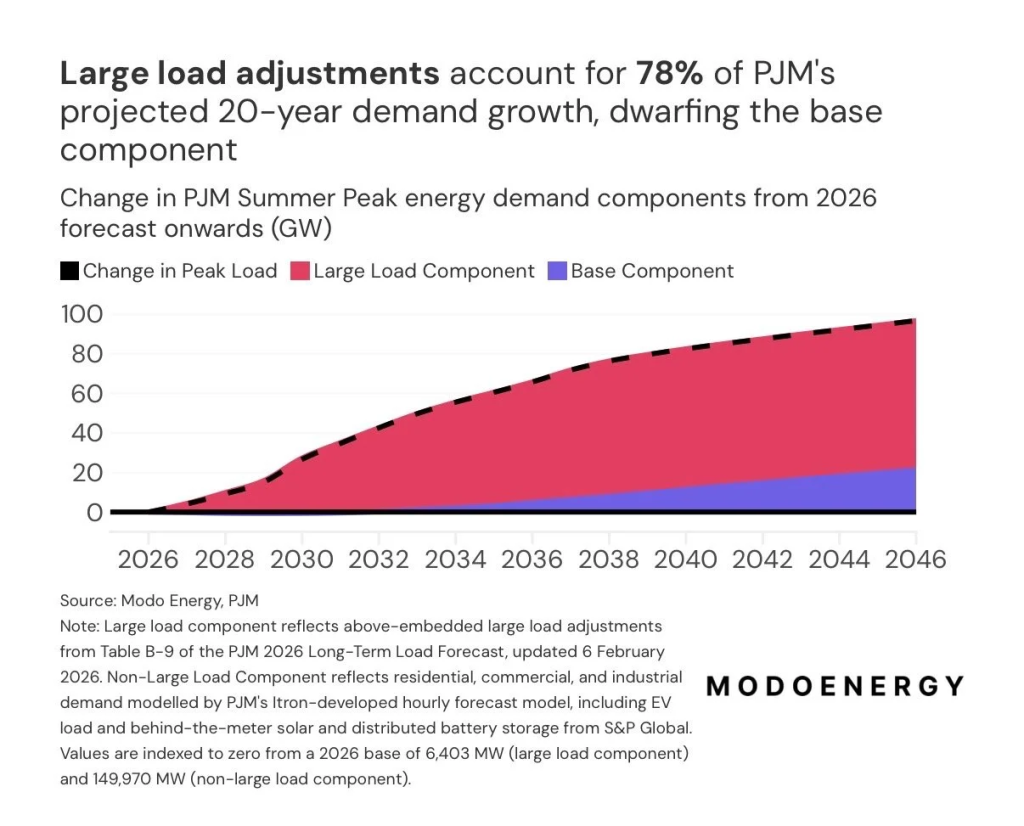
Valley Link may describe this as a general reliability project, but PJM’s own figures show what is driving the supposed need: data centers. Of the roughly 32 gigawatts of peak demand growth PJM projected through 2030, approximately 30 gigawatts, more than 90 percent, comes from data centers. Without that surge, PJM’s underlying demand forecast is essentially flat or declining in the near term. Loudoun should not be forced to sacrifice its land and landscapes so that some of the world’s wealthiest technology companies can consume unprecedented amounts of electricity.
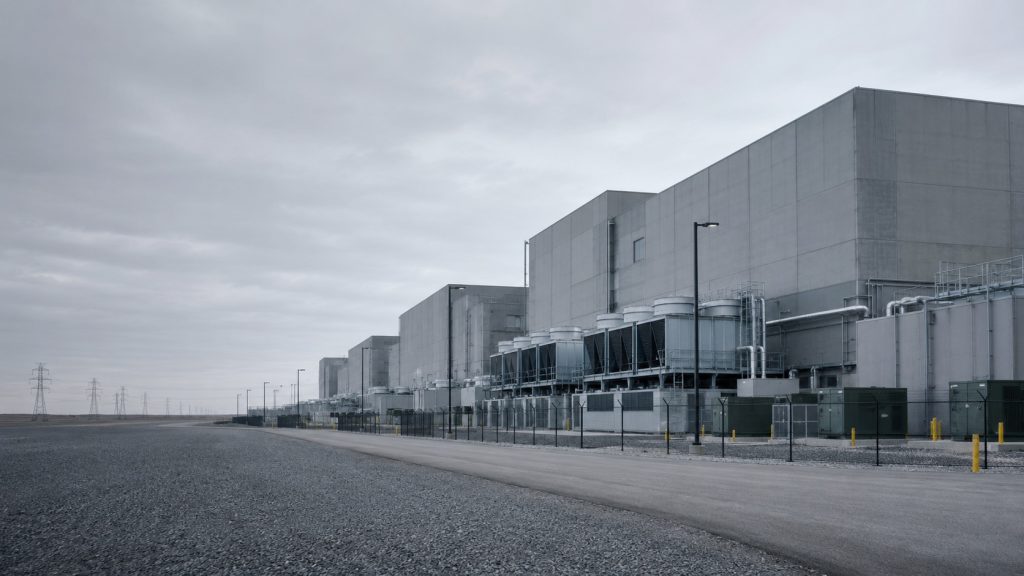
The project is a joint venture of Transource, Dominion Energy, and FirstEnergy Transmission.
There is a better way: put it underground
An underground high voltage direct current (HVDC) line could deliver more power and reach a reliable state immediately on completion, rather than years later, and at less cost than an eventual looped 765 kV system spread across a half dozen states. This is not theoretical. In early 2026 PJM approved Dominion’s proposal for an underground HVDC line in central Virginia. The coalition is not against a reliable grid. We are against sacrificing Loudoun’s land and landscapes when a less destructive option exists.
What is at stake
Health & Safety Concerns
The Valley Link Transmission project brings significant long-term implications for our community's well-being and the local environment. Understanding these risks is crucial for our advocacy.
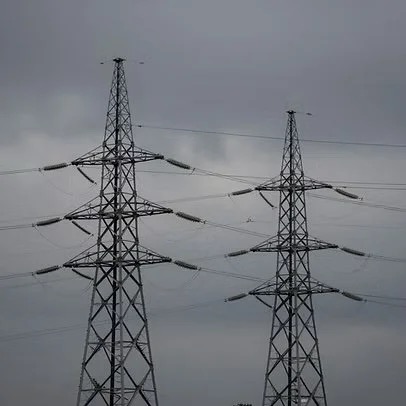
Electromagnetic Fields
In 2002 the World Health Organization’s cancer research agency (the IARC) classified the extremely low-frequency magnetic fields these lines give off as “possibly carcinogenic to humans,” pointing to studies that link them to childhood leukemia. The science is still debated, and we will not pretend it is settled. But the bottom line is this: why take a chance with your family’s health? Show us one Dominion, AEP, Valley Link, or Transource executive who lives under, or even near, one of these 765 kV power lines.
Read the research yourself. Environmental Health Sciences has gathered the peer reviewed work on power line EMF into a two page factsheet. The 15 studies it relies on are listed, each with the finding quoted and a link to the paper, so you can check the source rather than take anyone’s word for it.
Factsheet, EMF and health (PDF)
Same factsheet, black and white for printing (PDF)
Both documents are the work of Environmental Health Sciences and its Wireless and EMF Program. We are sharing them as published, and the findings and wording are theirs.

Acoustic Pollution
Have you listened to what a 765 kV line sounds like, 24 hours a day, 365 days a year? These lines give off a constant crackle, hiss, and hum called corona discharge, and it grows far worse in rain, fog, and snow. On monitored 765 kV lines, wet-weather noise has measured roughly 17 to 19 decibels louder than in dry weather, reaching close to 50 decibels at the edge of the right-of-way. For families whose homes sit beside the corridor, that sound never stops.
Ecological Impact
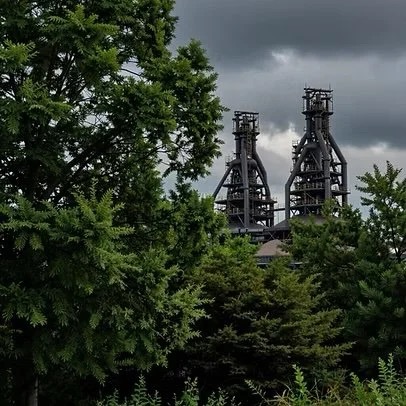
A 765 kV corridor is a permanent clear-cut, a wide treeless scar that does not grow back in our lifetimes. It clears forests, meadows, native fields, and crop lands, along with many front and back yards. Cutting it across our ridgelines breaks wildlife habitat into smaller, isolated blocks, interrupts the movement of animals and plants, and opens the forest interior to invasive species and edge effects that reach hundreds of feet into the woods on either side. Every stream and wetland it crosses faces erosion and lasting harm to water quality.